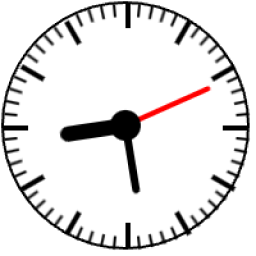
How to Read an Analog Clock: Hour, Minute and Second Hands Explained
Analog clocks are the only timekeeping device most people look at without really reading. A digital display gives you the answer; a clock face makes you work it out. That is exactly why analog clocks are still the better teaching tool — and why adults who never properly learned them feel a small pang of doubt in front of a station clock.
This guide breaks the skill into three parts that build on each other: identifying the hands, reading each one, and combining them into a single time.
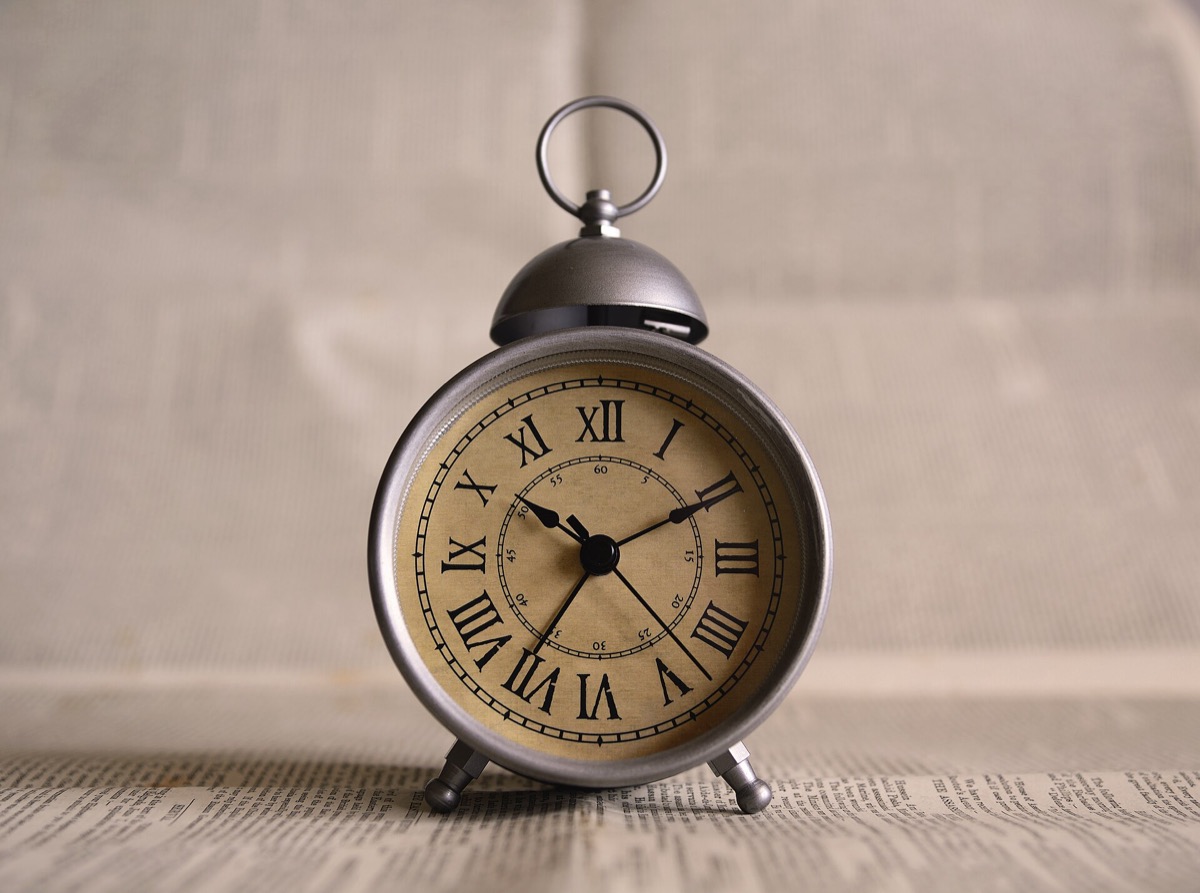
Photo: Ales Krivec / Unsplash — CC0, via Wikimedia Commons
The three hands
Almost every clock face has three hands. They differ in length and speed, and that difference is the only thing you need to tell them apart.
| Hand | Length | One full turn takes | Shows |
|---|---|---|---|
| Hour hand | Shortest, thickest | 12 hours | Which hour it is |
| Minute hand | Longer, thinner | 60 minutes | Which minute it is |
| Second hand | Longest, thinnest (often red) | 60 seconds | Which second it is |
Some minimalist clocks drop the second hand entirely. A few design clocks drop the numbers too, keeping only tick marks. The logic below still applies — you just count marks instead of reading digits.
Reading the hour hand
Look at the short hand. The number it is closest to is the current hour.
The catch: the hour hand never sits exactly on a number except at the top of the hour. It moves continuously, covering the 30 degrees between two numbers over a full 60 minutes. At 3:30 the hour hand is halfway between 3 and 4. At 3:45 it is three-quarters of the way to 4.
This is where most misreadings happen. If the hour hand looks "almost at 4", you have to check the minute hand before deciding. A time near 4 could be:
- 3:45 — hour hand is close to 4 but has not reached it, minute hand points at 9.
- 4:45 — hour hand is close to 5, not 4, minute hand points at 9.
So the rule is: read the minute hand first, then let it confirm the hour. If the minute hand is past the 6 (more than half an hour), the hour hand will be past the halfway point toward the next number — but the hour is still the lower number until the minute hand passes 12.
Reading the minute hand
The long hand tells you the minute, and the numbers on the dial do double duty. When reading minutes, ignore the printed digits and treat each one as a multiple of five:
| Number the hand points at | Minutes |
|---|---|
| 12 | 0 (or 60) |
| 1 | 5 |
| 2 | 10 |
| 3 | 15 |
| 4 | 20 |
| 5 | 25 |
| 6 | 30 |
| 7 | 35 |
| 8 | 40 |
| 9 | 45 |
| 10 | 50 |
| 11 | 55 |
Between two numbers there are four small tick marks, dividing each five-minute block into single minutes. So a hand pointing two ticks past the 8 is 42 minutes, not 40.
Memorising the table above is the single highest-value thing you can do. Once the multiples of five are automatic, the minute hand stops being a calculation and becomes a glance.
Putting it together: worked examples
The clock reads 3:45. The minute hand points at the 9, so it is 45 minutes. The hour hand is between 3 and 4, closer to 4 — consistent with 45 minutes past the hour. Time: 3:45.
The clock reads 12:00. Both hands point straight up at 12. The hour hand covers the minute hand exactly. Time: 12:00, noon or midnight — an analog clock cannot tell you which.
The clock reads 11:58. The minute hand is two ticks before the 12, so 58 minutes. The hour hand looks like it is sitting on the 12, but it is actually just below it. Time: 11:58, not 12:02. When both hands are crowded near 12, trust the minute hand: 58 minutes means the hour has not turned over yet.
The clock reads 6:30. Minute hand at the 6, hour hand exactly between 6 and 7. Time: 6:30.
The second hand and the tick marks
The thin sweeping hand is the second hand. On mechanical clocks it usually moves in small jumps — five or six per second — because the gear train advances in discrete steps. On quartz clocks it jumps once per second. On a smooth-sweep quartz movement it glides, which is a cosmetic feature rather than a sign of mechanical quality.
The second hand is also a quick sanity check: if it is moving, the clock is running. A dead second hand on a battery clock means a dead battery, not a stopped time.
Common mistakes
- Reading the hour from a hand that has already moved past it. Covered above — check minutes first.
- Treating the numbers as minutes directly. A hand at the 4 is 20 minutes, not 4 minutes.
- Forgetting the 12-hour wrap. An analog clock shows each time twice per day. 7:15 could be morning or evening; only context tells you which.
- Ignoring the small marks. Precision to the minute requires counting ticks, not just glancing at numbers.
Practice that actually works
The fastest way to get fluent is to check yourself against a digital source. Open an analog clock next to a digital clock and read one, then verify with the other. Ten rounds of that is usually enough to make the mapping permanent.
If you want to practise the reverse skill — going from a written time to a dial — the same page works in the other direction: set a time in your head, then find it on the face before the second hand completes a turn.
Once reading a dial is automatic, the world clock becomes far more useful, because you can read several faces at once and compare them without translating each one in your head.