On Time
How we understand time — and how we live with it.
 Reference
CST Is Three Different Times
One abbreviation, three offsets: CST is UTC+8 in Beijing, UTC−5 in Havana and UTC−6 in Chicago. Why time zone codes break the moment they cross a border — and how to write a time that survives the trip.
 Guides
Embed a Flip Clock in Your Web Page: One iframe Is Enough
Add a flip clock to your website by pasting one iframe snippet: no plugin, no sign-up, no cost. Works on WordPress, Squarespace, Wix, Shopify and Notion, in two styles, with time zone, colours and size you can set without code.
 Product
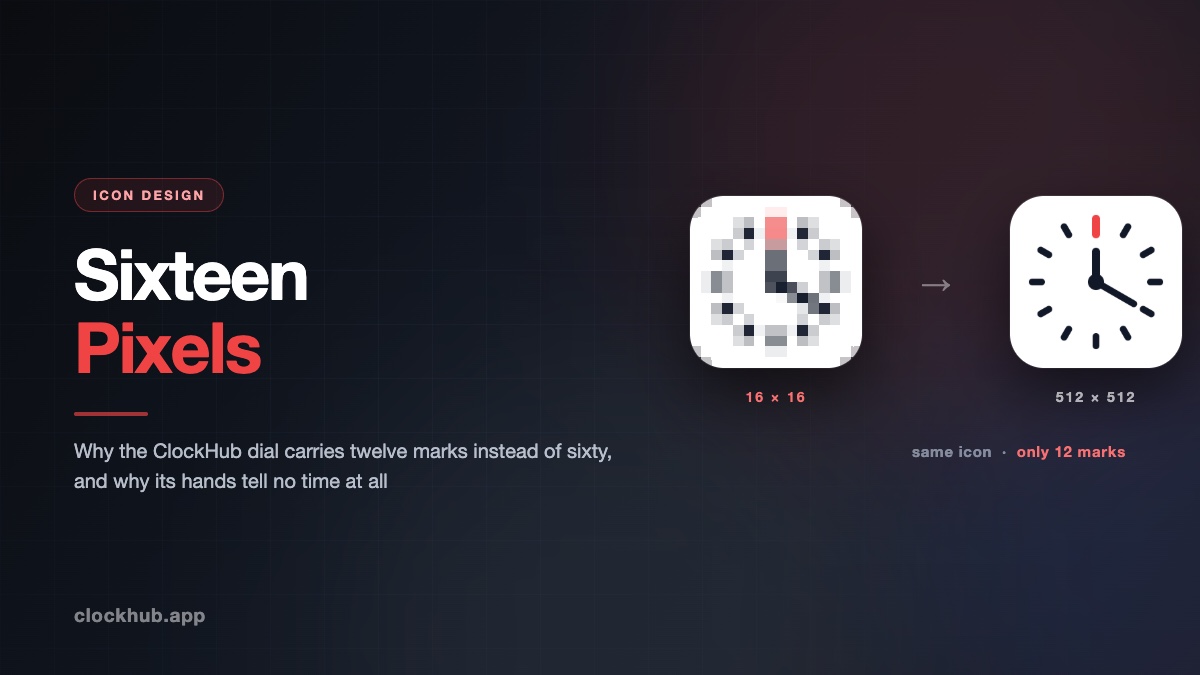
The ClockHub Icon: Designing a Dial Backwards from 16 Pixels
Why the ClockHub icon has twelve tick marks instead of sixty, why its hands show a time that never happened, and why it is generated by code rather than exported from a design tool.
 Guides
The First Second of 2027 Takes 26 Hours to Arrive
New Year is not a simultaneous global event — it sweeps westward across 26 hours, from UTC+14 to UTC−12. Why that span exists, how 1 January came to be chosen, and why 2026 is the last New Year with a possible 23:59:60.
 Reference
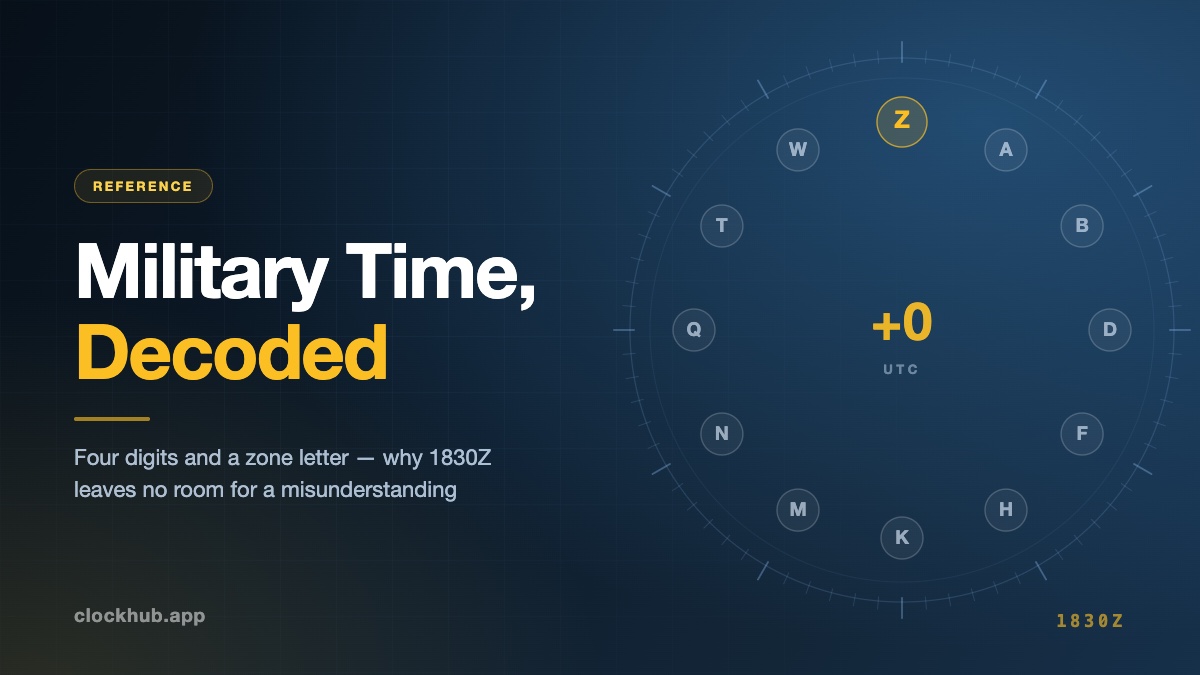
Military Time: What the Four Digits Actually Encode
Military time is not just the 24-hour clock written shorter. Fixed width, no separators, no AM/PM, and an optional zone letter — where each rule comes from, how to say it, and how a DTG packs a whole timestamp into 12 characters.
 History
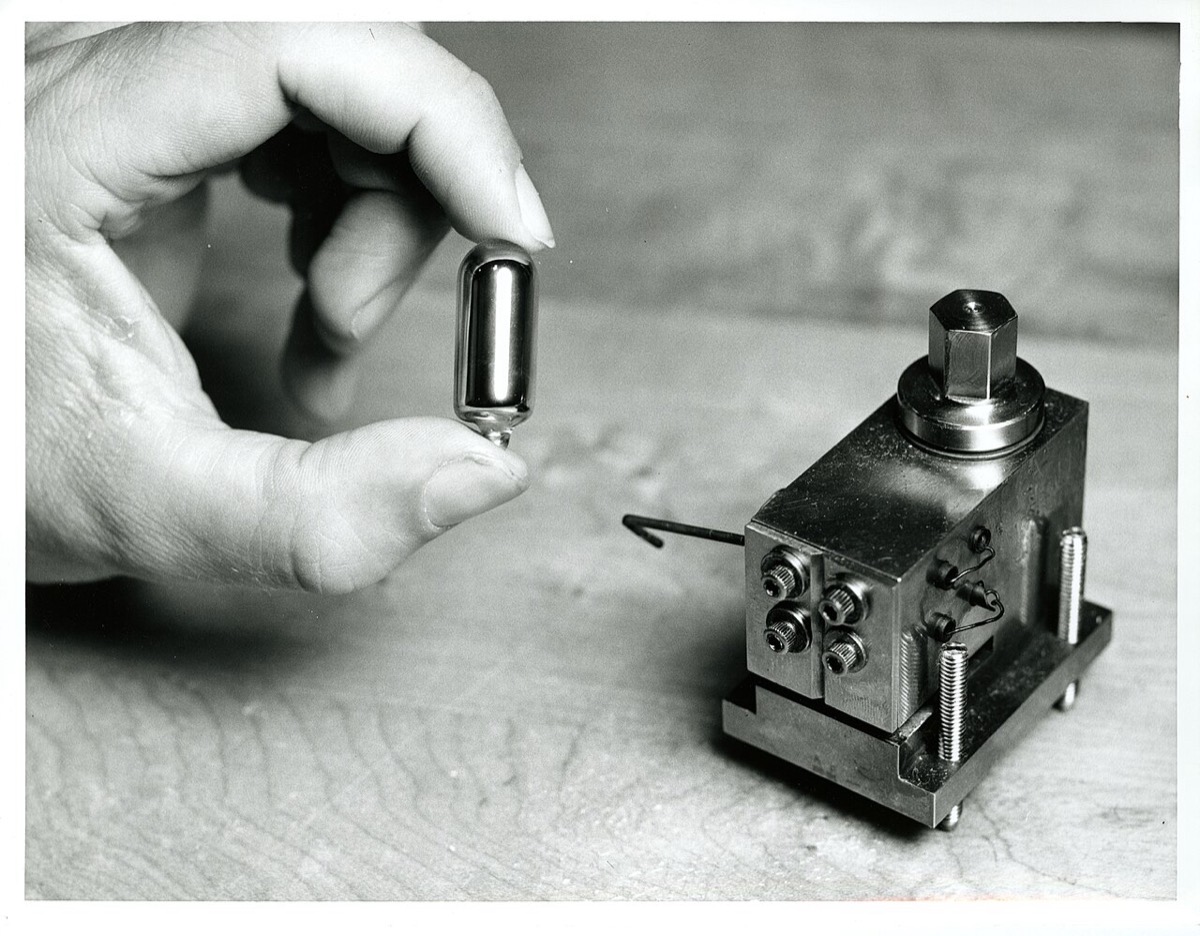
From Shadow to Atom: A History of Timekeeping
How sundials, escapements, pendulums and caesium atoms turned time from a string of events into something measurable — and why the leap second is being abolished in 2027.
 Reference
Sleep Cycles and the Best Time to Sleep: Does the 90-Minute Cycle Hold Up?
The 90-minute sleep cycle is a population average, not a constant — individual cycles vary by up to 20 minutes. What that means for bedtime, why waking on a multiple of 90 rarely works, and what the sleep inertia evidence actually shows.
 Reference
Unix Timestamps: From 1970 to Now
One integer, fifty-six years, and a deadline in 2038. What Unix time actually counts, why the epoch moved three times before it landed on 1970, why leap seconds break the arithmetic, and which systems will not survive 19 January 2038.
 Guides
12-Hour vs 24-Hour Time: How to Convert Without Mistakes
The two rules that make 12-hour to 24-hour conversion foolproof, why 12 AM is midnight and 12 PM is noon, and where each format is actually used around the world.
 Reference
UTC Offsets and Daylight Saving Time: A Practical Guide
Why UTC+8 does not mean the same thing all year, which countries still change their clocks, how to read an offset like UTC+05:30, and the meeting-scheduling mistakes DST causes.
 Guides
How to Read an Analog Clock: Hour, Minute and Second Hands Explained
A step-by-step guide to reading any analog clock: which hand is which, why the hour hand moves slowly between numbers, how to tell 3:45 from 4:45 at a glance, and what the small tick marks mean.
 Product
ClockHub - Your Professional Time Tools Platform
ClockHub is a professional online time tools platform that provides analog clocks, digital clocks, countdown timers, timezone converters, time calculators and other practical tools. With elegant interface design, it helps you manage time efficiently and improve work and life productivity.